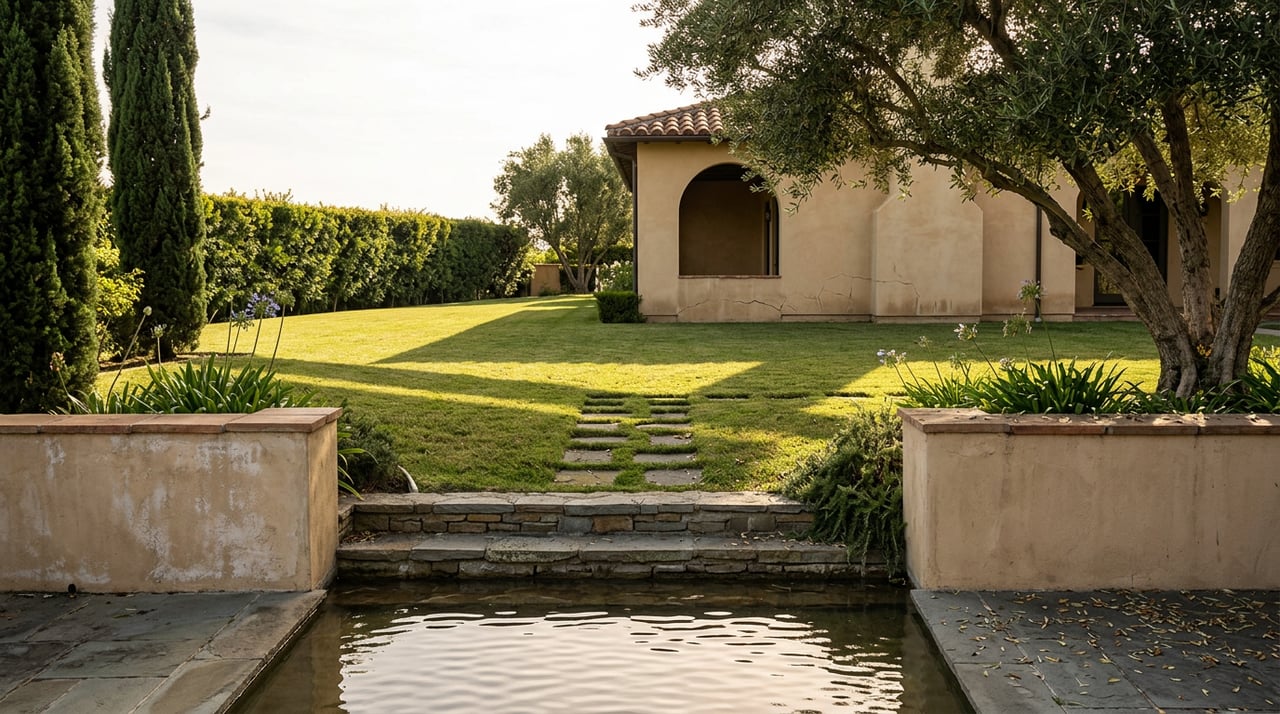
Ask a buyer what they think they're purchasing when they put an offer on a house that backs up to Toluca Lake, and most will say the same thing: the water. The view, the dock, the ability to put a small boat in on a Sunday afternoon. It feels like the kind of amenity that travels with the deed the way a pool or a mature oak tree does.
It doesn't, at least not automatically. The lake is a privately controlled body of water, and the right to touch it, moor on it, or even walk along its edge is administered separately from the sale of the house. That distinction rarely shows up in a listing description, and it is exactly the kind of thing that surfaces late in escrow, after a buyer has already waived contingencies on the assumption that the address settles the question.
The lake is infrastructure before it is a lifestyle amenity
It helps to know what the lake actually is. Toluca Lake sits inside a 1.22-square-mile pocket of Los Angeles that was platted in 1923 as one of the first bedroom communities built for commuters into the San Fernando Valley, back when the area was still known as Rancho Forman Toluca. The lake itself was reshaped in the 1930s, when its bottom was paved with asphalt as part of the flood control project that channelized the Los Angeles River. That history matters for a simple reason: this was never a wild lake that happened to have houses grow up around it. It was engineered, and engineered water bodies come with engineered rules about who gets to use them.
That governance layer is where things get complicated for buyers. The broader neighborhood has an active civic homeowners association that organizes community events and represents residents on local issues. Whether that same organization, a separate lakefront entity, or an older recorded agreement holds legal authority over the shoreline, the docks, and the water surface itself is not something you can assume from the HOA's public-facing website. It has to be confirmed through the actual governing documents tied to the specific parcel, not inferred from the name on a community newsletter.
This is the first place a transaction can go sideways. A buyer's agent who assumes the general neighborhood association also controls lake access, without pulling the CC&Rs recorded against that exact lot, can walk a client into a closing without ever confirming that lake privileges transfer with the sale at all.
The comp problem an algorithm cannot solve
Only a small slice of Toluca Lake's housing stock actually fronts the water. Agents who work this pocket regularly can often recall the last several true waterfront sales from memory, because there simply aren't many to track. That scarcity is charming until it becomes a lender's problem.
Appraisers build value opinions by comparing a subject property to recently sold homes that share its defining characteristics. When a home doesn't conform to the surrounding neighborhood, standard appraisal guidance is clear that the process requires more work and, often, more cost. A typical single-family appraisal runs somewhere in the $250 to $500 range nationally, but that estimate assumes a reasonably normal comp pool to draw from. A true lakefront parcel in this neighborhood doesn't have one. The nearest comparable sale might be a non-waterfront home two blocks away, a lakefront sale that closed eighteen months ago, or a property with a similar view but no direct lake access at all. None of those are a clean match, and an appraiser has to make manual adjustments to bridge that gap rather than pulling three tidy comps off a list.
For a buyer, this shows up as risk to the financing timeline. If the appraisal comes in below the contract price because the comp file is thin rather than because the home is overpriced, the loan can stall while the appraiser and lender work through additional documentation. Buyers who are counting on a fast, uneventful appraisal because they've bought other homes in this same zip code before are often surprised that the waterfront parcel behaves nothing like its neighbors two streets back.
What actually needs verifying before you remove contingencies
A few specific items separate a smooth waterfront closing from one that stalls in week five:
- Which document actually governs the water. Request the CC&Rs recorded against the specific parcel, not the general neighborhood association's public materials. Confirm in writing whether lake access, mooring rights, and shoreline maintenance obligations are tied to this property or held separately.
- Whether membership transfers with the sale or requires reapplication. Some private-lake structures convey access automatically with ownership. Others treat it as a membership that the new owner must apply for, sometimes with a waiting period. Ask this question directly and get the answer from the governing entity, not from the listing agent's understanding of how it usually works.
- The resale disclosure package required under California law. Any home inside a common interest development, which includes many properties in this pocket of Toluca Lake, is entitled to a formal resale certificate under Civil Code Section 4525. That certificate has to spell out current assessments, any unpaid amounts, pending special assessments, and a copy of the governing documents themselves.
- The condition of any elevated structure near the water. If the home has a deck or balcony extending toward the shoreline, the inspection history on that structure matters more here than it does on a typical inland lot.
That last item deserves its own explanation, because it changed this year.
The paperwork got heavier in 2026
As of January 1, 2026, a new statutory requirement amended Civil Code Section 4525 to add a specific item to the mandatory resale disclosure package: a copy of the most recent exterior elevated element inspection report, covering things like decks and balconies, as required under Civil Code Section 5551. This isn't a Toluca Lake specific rule. It applies to HOA-governed properties across California. But it lands with particular weight in a micro-market where waterfront homes are more likely than average to have an elevated deck or balcony extending out over sloped ground toward the shoreline.
Before this year, a buyer's team might not have thought to ask for that inspection report at all, since it wasn't part of the statutory checklist. Now it is, and skipping the request means skipping a document the seller's HOA is legally obligated to produce. For a waterfront home where the deck is arguably the single most-used square footage in the house, that report is worth reading closely rather than treating as a box to check.
Why this is worth getting right before you're in escrow
None of this is a reason to avoid buying on the water in this neighborhood. It's a reason to build the diligence timeline around the actual friction points rather than the generic ones. A thin comp pool means budgeting more time for the appraisal to land, not less. An ambiguous governance structure means confirming lake rights in writing before the inspection contingency expires, not assuming the listing description was accurate. A new disclosure requirement means specifically requesting the elevated element report rather than trusting that it arrived in the standard packet.
Buyers who treat a Toluca Lake waterfront purchase like any other home purchase in the neighborhood are the ones who end up renegotiating in week four over something that could have been confirmed in week one.
FAQ
Does every home in Toluca Lake include access to the lake? No. Only the small number of parcels that directly front the water carry lake privileges, and those privileges are governed by private agreements rather than granted automatically by proximity to the neighborhood.
Who do I ask to find out if lake access transfers with a specific property? Request the CC&Rs and resale certificate tied to that exact parcel, not general information from the broader neighborhood association. A title company or real estate attorney can help confirm which recorded document actually controls water rights for that lot.
Does the new 2026 disclosure requirement apply to every home sale, or just HOA properties? It applies specifically to sales inside common interest developments governed by Civil Code Section 4525, which includes many but not all properties in this pocket of the neighborhood. A standalone single-family home with no HOA governance would not fall under this particular requirement.
If you're weighing a purchase or sale on Toluca Lake's waterfront and want a pricing and diligence strategy built around what actually complicates these transactions, Jennifer Landon can walk through it with you. Schedule a valuation and strategy session before you're staring down a contingency deadline with unanswered questions about the water.