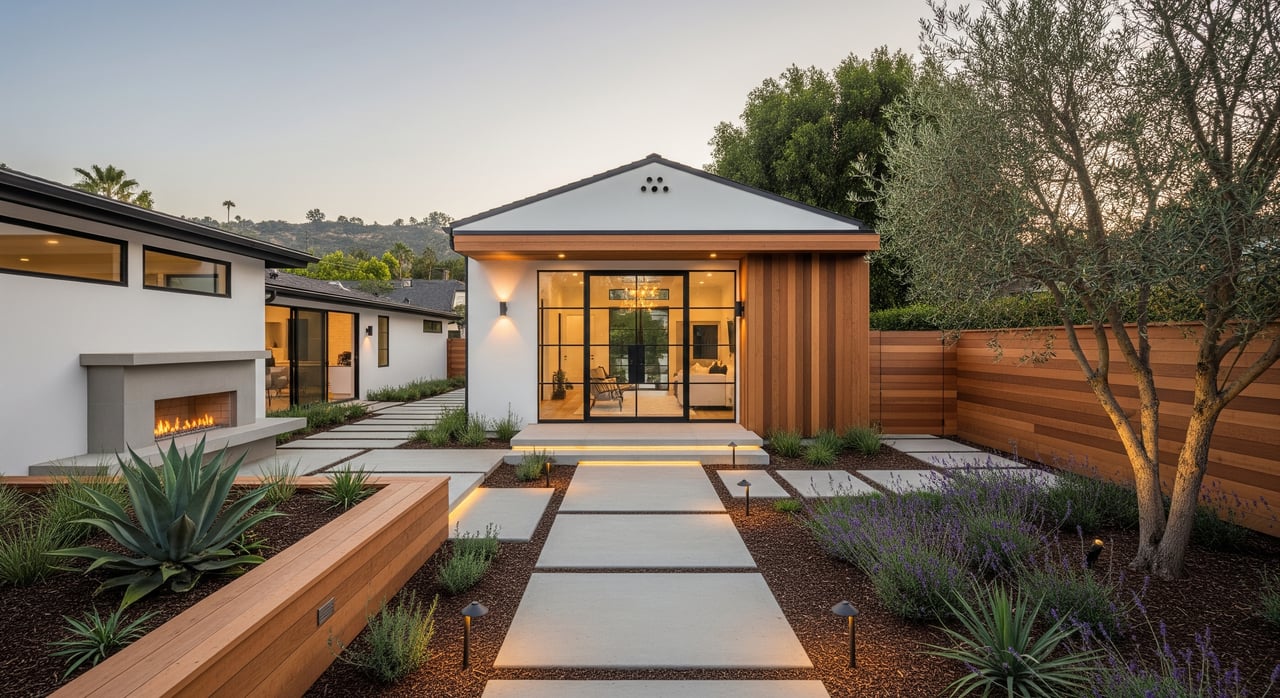
Thinking about adding an accessory dwelling unit to your Encino property? You are not alone. ADUs can create flexible living space, long-term rental income, or room for multigenerational living. In this guide, you will learn what is allowed in Encino under Los Angeles rules, how much projects typically cost, how to think about ROI, and the steps to move forward with confidence. Let’s dive in.
What counts as an ADU in Encino
An accessory dwelling unit is a secondary residential unit on the same lot as a primary home. In California, state laws support several ADU types, and Los Angeles applies objective standards to review them.
- Detached ADU: A new, standalone structure in your yard.
- Attached ADU: An addition connected to your main home.
- Conversion ADU: A garage, basement, or other permitted structure converted into living space.
- Junior ADU (JADU): Up to 500 square feet created within the main home’s existing footprint.
State law commonly allows ADUs up to 1,200 square feet, while JADUs are capped at 500 square feet. Approvals are ministerial when you meet objective standards, which means no discretionary hearings.
Encino lot patterns and feasibility
Encino is largely single-family with many R1 parcels, garages, and usable rear yards. That mix makes garage conversions and backyard units common and often practical. Some blocks also have alley access, which can simplify siting and utilities.
Hillside and canyon edges introduce slope, fire, and geotechnical considerations. Those factors can add cost, extend timelines, and tighten placement options. Older single-story ranch homes often have garages or unused spaces that convert well.
A quick feasibility checklist
- Confirm zoning and overlays for your parcel, including any hillside, flood, or preservation areas.
- Map existing structures, setbacks, utility locations, driveway or alley access, and easements.
- Check whether the property is in a mapped fire severity zone that may require sprinklers or additional clearance.
- Review the City’s ADU submittal checklist so your plan set aligns with objective standards.
Rules you must meet in Los Angeles
California’s ADU laws preempt many local restrictions and require ministerial approvals when standards are met. Los Angeles follows state minimums and can apply objective local standards, such as height, setbacks, and design criteria.
- Size: State law commonly references a maximum of 1,200 square feet for standard ADUs; JADUs are limited to 500 square feet.
- Setbacks: State rules often allow reduced side and rear setbacks, such as 4 feet, but you should confirm how Los Angeles applies them on your lot.
- Height: Local height limits apply and can vary by zoning and proximity to neighbors.
- Parking: State rules limit when cities can require ADU parking, including many near-transit situations and when converting existing parking. Confirm what applies to your site.
Parking, owner-occupancy, and special areas
Most standard ADUs do not require the owner to live on site under current state law. JADUs, by definition, are tied to an owner-occupied primary residence. If your property has a historic designation or is within a preservation overlay, additional objective design standards may apply.
Hillside and high fire hazard areas can trigger added reviews and requirements, such as defensible space, materials, or sprinklers. Utility capacity, sewer laterals, and easements can also affect where and how you build.
Costs in Encino: design to build
Every project has soft costs, hard costs, site work, and a contingency. Plan for architectural and engineering plans, plan check and permits, and potential surveys or geotechnical reports for hillside sites. Hard costs cover foundation, framing, finishes, and MEP systems. A 10 to 20 percent contingency is common to cover unknowns.
Typical cost ranges in Los Angeles area markets like Encino:
- Garage conversion: About $40,000 to $150,000 depending on structural upgrades, plumbing, and whether the garage is attached or detached.
- Small attached or new ADU, roughly 400 to 800 sq ft: About $150,000 to $350,000.
- Detached new ADU, larger or higher finish levels: About $250,000 to $500,000+.
- Premium or complex hillside builds: $500,000+.
Actual bids depend on site access, slope, utilities, and finish choices. Hillside or canyon sites often fall at the high end due to grading, retaining walls, and structural complexity.
Permitting and timeline
You can expect several phases before move-in. The more complete your plans, the smoother the plan check typically goes.
- Pre-check and design: 2 to 8 weeks to scope goals, verify site constraints, and set budget.
- Plan preparation and submittal: 4 to 12 weeks with your architect or designer.
- LADBS plan check: A ministerial process when standards are met, but still allow several weeks to a few months depending on complexity.
- Construction: About 2 to 4 months for simple garage conversions and 4 to 12 months for new detached ADUs.
From first feasibility steps to occupancy, many Encino projects land in the 6 to 18 month range.
Rental strategies and local rules
Encino homeowners often choose long-term leases of 30 days or more to create stable income. Many also use ADUs for extended family, caregivers, or flexible guest space. Short-term rentals under 30 days are tightly regulated in Los Angeles and require registration and payment of transient occupancy taxes. ADUs used as short-term rentals may be limited or prohibited, so confirm current rules before you plan on nightly or weekly stays.
ROI: a simple way to run the numbers
Start with your total project budget, then estimate achievable rent based on size, finishes, and location. Include a vacancy allowance, an operating expense estimate, and any management costs. The result is your annual net operating income.
A simple ROI snapshot
- Assumptions: $200,000 total project cost and $2,500 monthly rent for a well-finished one-bed ADU.
- Gross rent: $30,000 per year.
- Vacancy and collection allowance: 7 percent, leaving $27,900 effective gross.
- Operating expenses: 30 percent of effective gross, or $8,370.
- Estimated annual NOI: $19,530.
- Simple cash-on-cash return if paid in cash: about 9.8 percent ($19,530 divided by $200,000).
Your results will vary based on final construction cost, rent, vacancy, and whether you self-manage. Financing costs, depreciation, and local property tax changes also affect your after-tax returns and should be part of your analysis.
Step-by-step next steps
- Confirm zoning and overlays for your parcel and note any hillside, flood, or preservation areas.
- Review the City’s ADU checklist so your plan set hits all objective standards.
- Do an early consult with LADBS or an experienced ADU design professional to flag red flags and likely fees.
- Obtain at least two to three contractor bids and one architectural estimate with scope details.
- Build a simple model using your bids, rent comps, and likely financing terms.
- Check with the Los Angeles County Assessor about reassessment and property tax implications.
- If you are considering short-term rentals, review the City’s rules and registration requirements before you commit to that strategy.
Common pitfalls to avoid
- Skipping a parcel and overlay check, then discovering a hillside or fire zone constraint late in the process.
- Underestimating utility upgrades like sewer laterals or electrical panel capacity.
- Relying on a single bid or a vague scope that invites change orders.
- Planning on short-term rentals without confirming what is allowed and whether registration applies.
Adding an ADU in Encino can be a smart way to create flexibility and long-term value when you plan it with clear standards, realistic budgets, and solid rent assumptions. If you want help pressure-testing ROI and understanding how an ADU could affect your home’s value and resale, schedule a valuation and strategy session with Jennifer Landon.
FAQs
Can I build an ADU on an R1 lot in Encino?
- Yes, state law supports ADUs in single-family zones and Los Angeles applies objective standards, but you must verify setbacks, overlays, easements, and site constraints.
Do I have to live on the property to build an ADU?
- Not for most standard ADUs under current state rules, but JADUs require the primary residence to be owner-occupied; confirm current Los Angeles policy.
Can I convert my garage into an ADU in Encino?
- Often yes, and it is a common local path with lower cost than new construction, provided you meet building code and any applicable parking rules.
Are short-term rentals allowed in an ADU?
- Los Angeles has strict short-term rental rules with registration and transient occupancy taxes, and ADUs may face limits or prohibitions, so check current city regulations first.
Will an ADU raise my property taxes?
- New construction and added living area can trigger reassessment; contact the Los Angeles County Assessor to understand how your project may affect taxes.
How long does ADU permitting and construction take?
- Many Encino projects take 6 to 18 months from planning through construction, with simple garage conversions on the shorter end and new detached builds longer.